
Government standards for domestically produced commemorative coins
Renita WingfieldKey Takeaways
- Define domestic coin manufacturing in contract terms that match the applicable FAR and agency clauses, so origin claims are testable at receiving and audit time.
- Treat materials, finishing steps, and tooling custody as controlled requirements, since durability performance and insignia protection will affect acceptance as much as design quality.
- Make traceability paperwork part of the deliverable, because complete certifications and inspection records prevent payment delays and reduce disputes after delivery.
You can only claim domestic production for government coins when the contract language, factory process, and paperwork all match.
Someone asks for “made in the USA,” the vendor agrees, and the order moves forward without defining what that means for the specific buy. Agencies then apply federal sourcing rules at inspection time, and a coin that looks perfect can still fail acceptance.
"Most disputes around government challenge coins and commemorative pieces start the same way."
Domestic content tests used in federal purchasing are tightening, with component thresholds set at 60% now, 65% in 2024, and 75% in 2029 for many purchases. That puts pressure on how you define “domestic coin manufacturing,” how you control the supply chain for blanks and plating, and how you document each step so payment is not delayed.
Separate legal tender commemoratives from government challenge coins and medallions

Legal tender commemoratives are U.S. Mint coins authorized by Congress, while government challenge coins and medallions are non-monetary items bought under procurement rules. Confusing the two creates sourcing errors, artwork approval problems, and schedule risk. Congress also caps most U.S. Mint commemorative coin programs at two per year. That limit matters when teams assume the Mint can produce any commemorative design on request.
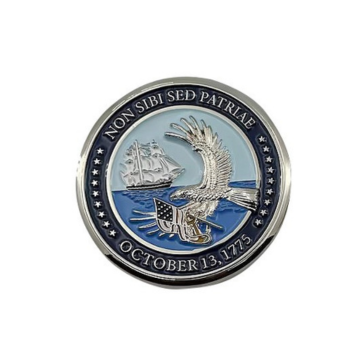
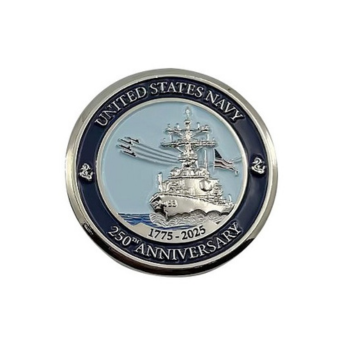
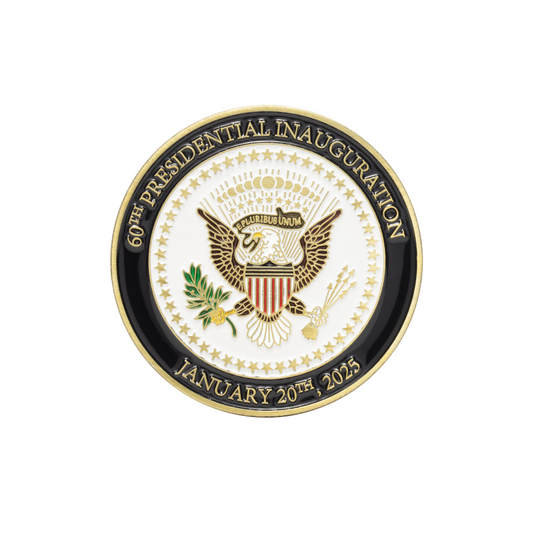
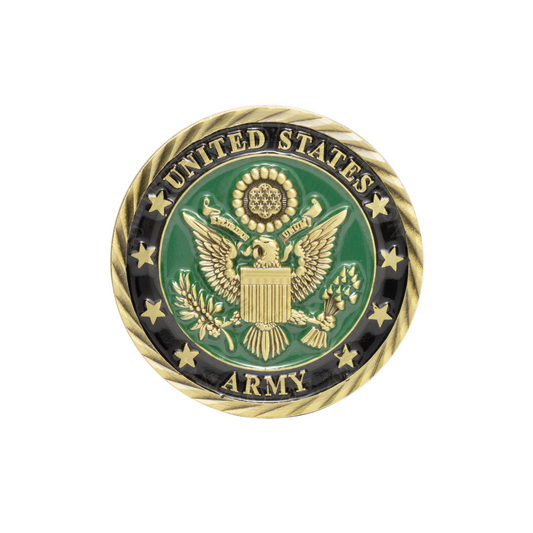
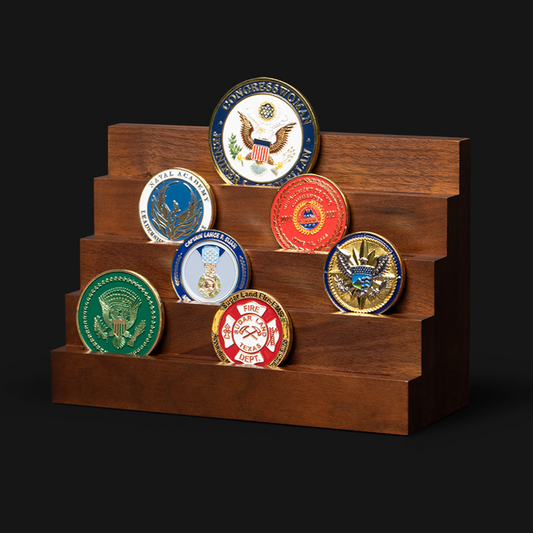
Challenge coins typically function as recognition items, unit tradition pieces, or event mementos. They are not currency, and they do not go through U.S. Mint authorizing steps. That shift changes almost everything that matters for compliance, including which domestic preference rules apply, how artwork permissions get handled, and what inspection standards your receiving team should use.
The practical takeaway is simple. Legal tender commemoratives follow a statutory process, and your role is mostly to align with the program requirements. Government challenge coins sit in the same operational bucket as other promotional or award items, so you need clear procurement language and verifiable manufacturing controls to avoid a “looks fine, cannot accept” outcome.
Know which federal procurement rules control domestic coin manufacturing
Federal sourcing requirements for coins come from the clauses and thresholds attached to your purchase, not from a generic “made in America” promise. The Buy American Act and related FAR rules are common starting points, and they often flow down to materials, subassemblies, and finishing steps. The safest approach is to treat domestic origin as a compliance requirement you must prove at delivery.
Domestic preference can apply differently depending on your buying path. Micro-purchases, simplified acquisitions, and larger contracts can trigger different clauses, and agency supplements can add extra controls. That means procurement and program staff should align early on the applicable clause set, because the factory plan will change if you must treat coin blanks, plating chemistry, or packaging as controlled inputs.
|
Checkpoint |
What it means for your order |
What you should confirm before production |
|---|---|---|
|
Item type and intended use |
A recognition coin order will be treated as a procured good, not as currency. |
Confirm the purchase category and any agency policy tied to awards. |
|
Applicable domestic preference clause set |
The contract will define the sourcing test that the vendor must meet. |
Confirm which FAR clauses and agency supplements will flow down. |
|
Scope of covered inputs |
Some rules focus on where manufacturing occurs, others focus on component content. |
Confirm how blanks, plating, and packaging will be treated for compliance. |
|
Inspection and acceptance method |
Receiving can reject goods that lack required markings or documentation. |
Confirm who inspects, what they verify, and what triggers rejection. |
|
Record retention expectations |
Audits can require proof months after delivery and payment. |
Confirm how long traceability documents must be kept and shared. |
Teams at Command Challenge Coins typically treat this as a front-end scoping task, because a compliant order depends on matching the clause set to a factory plan and a documentation plan. You do not need legal jargon in every email, but you do need a shared definition of “domestic” that survives receiving, audit questions, and leadership review.
Use clear country of origin terms in statements of work

A statement of work should define domestic origin in measurable terms that map to the contract clauses you’re using. “Made in the USA” alone is not enough for government requirements for challenge coins, because it does not specify what counts as manufacturing, which inputs matter, or what proof will be accepted. Clear language prevents rework, rejection, and payment holds.
A clean way to write the requirement is to tie it to place of manufacture, covered components, and documentation. A purchase for 500 retirement coins that must be domestically manufactured can require die striking, plating, enameling, and final assembly to occur in the United States, while also requiring domestic origin for the coin blanks and a certificate that lists each production site. That single definition gives your vendor a build plan and gives your receiving team a checklist.
Country of origin wording also affects branding and ethics requirements. Agencies often restrict how seals, unit names, and official insignia appear, and they can require approvals for die art, packaging copy, and presentation cases. Tight terms help you avoid a late-stage redesign and reduce the risk that a vendor uses offshore sub-steps that invalidate the domestic claim even when final assembly happens locally.
Check metals, plating, and finishes against agency durability needs
Material and finish choices should be treated as performance requirements, not just design options. Agencies care about how a coin holds up in handling, storage, and presentation, and that ties directly to metal selection, plating thickness, and enamel type. If you specify durability and appearance together, you reduce returns and keep the order consistent across reorders.
Base metal, plating, and color fill each introduce a different failure mode. Soft base metals can dent, thin plating can wear through at high points, and low-quality enamel can chip at edges. Procurement teams often focus on the look of a proof, but the better control point is how the finish performs after weeks of pocket carry and repeated handling at ceremonies.
Durability requirements also intersect with domestic sourcing. A vendor that plates domestically but buys blanks with unknown alloy composition can struggle to provide consistent color and adhesion, and the defect rate can climb late in production. If you want fewer surprises, specify the alloy, call out any restricted substances your agency follows, and require that finish steps happen at the documented domestic site.
Confirm factory security and die control for government insignia
Government insignia, unit marks, and agency seals require tight control of tooling, artwork files, and production scrap. Factory security matters because uncontrolled dies can lead to unauthorized re-strikes, misuse of official marks, or loss of trust in the program that issued the coin. A secure process protects your agency and helps a vendor pass compliance reviews.
Die control starts with limiting who can access art files and who can approve revisions. It continues with serialized tooling storage, controlled press access, and documented destruction or retention instructions at end of job. Those steps are not ceremonial. They help you answer hard questions if leadership asks how the agency ensured an official seal did not end up on unapproved items.
Security also supports domestic verification. If the same vendor uses multiple facilities, the ability to show where dies were stored and where strikes occurred becomes part of proving where manufacturing happened. You’ll get better outcomes when your purchase language requires a die custody log and a written policy for handling overruns, scrap, and damaged pieces.
Require documentation for traceability, inspections, and acceptance at delivery
"Documentation is what turns a domestic claim into an acceptance-ready delivery."
Receiving teams typically need a packet that ties the finished coins to approved materials, approved production sites, and an inspection method that matches the contract. When that packet is missing or vague, the order can sit in limbo even if the coins look flawless.
- Country of origin certification that matches the contract clause language
- Material declarations for base metal, plating, and color fill inputs
- Factory process statement listing each production step and location
- Inspection results tied to agreed sampling and defect criteria
-
Packing list that maps quantities to lots and any serialized packaging
Traceability also helps you manage reorders and disputes. If a later shipment looks different, you can compare plating specs, enamel type, and lot records instead of relying on subjective visual checks. Acceptance becomes faster when the receiving team can verify compliance from paperwork first and then confirm the physical goods match what the packet describes.
Avoid common compliance failures that delay payment or trigger disputes
Most disputes come from preventable gaps, not from bad intent. Vague origin language, undocumented sub-steps, missing inspection criteria, and unclear acceptance roles can all stop payment and create tense vendor conversations. The cleanest path is to treat compliance as part of production, with shared checkpoints and a complete delivery packet.
Contracting teams often focus on price and delivery date, then discover late that the vendor used an offshore blank supplier or performed plating at an unlisted shop. Receiving then has no clean way to accept the goods, and program staff gets pulled into reconciliation work. A tighter statement of work and clear flow-down requirements reduce that risk without adding unnecessary friction.
Execution discipline is what separates a smooth government coin program from a recurring headache. When you hold the line on definitions, factory controls, and documentation, you protect the meaning of the coin and the integrity of the agency issuing it. Command Challenge Coins fits best in programs that value that rigor, because the process is what keeps recognition items honorable and fully acceptable.